
Welcome to Rose Cottage Solar Farm
Welcome
Thank you for taking the time to find out more about our plans for a new solar farm at Rose Cottage, Thurstaston.
Listening to the local community is at the heart of our approach. We want to work closely with residents to develop a scheme that reflects what matters most locally and delivers meaningful benefits for Thurstaston and the wider Wirral.
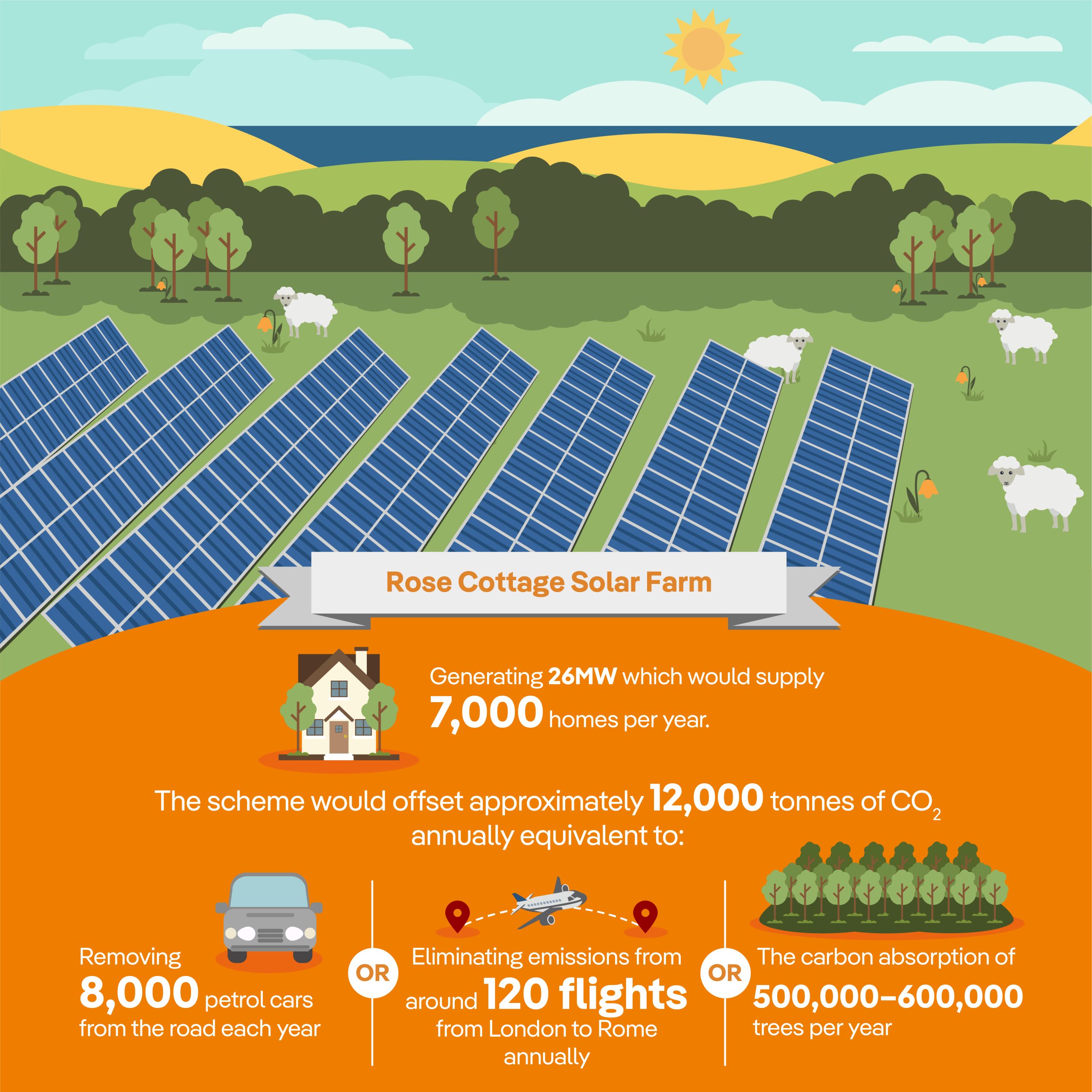
Chint Solar’s vision is to help deliver a more sustainable energy future for the area. We are proposing a 26MW solar farm to help power local homes with clean, home-grown energy.
Our public consultation closed on 19th February 2026. All feedback received will be reviewed and summarised in a Statement of Community Involvement, which forms part of the future planning application.
Why do we need Solar Power?
By producing solar power here in Britain, projects like Rose Cottage help reduce reliance on imported fossil fuels, which have contributed to rising energy prices in recent years.
The Wirral, like the rest of the UK, is facing a significant climate challenge. Solar energy offers a proven and reliable way to generate clean power, helping cut carbon emissions and support progress towards national and local net zero targets.
With a capacity of 26MW, the proposed scheme would make a meaningful contribution to these goals.
Site Location
The proposed site is located at Rose Cottage, just off Station Road in Thurstaston.
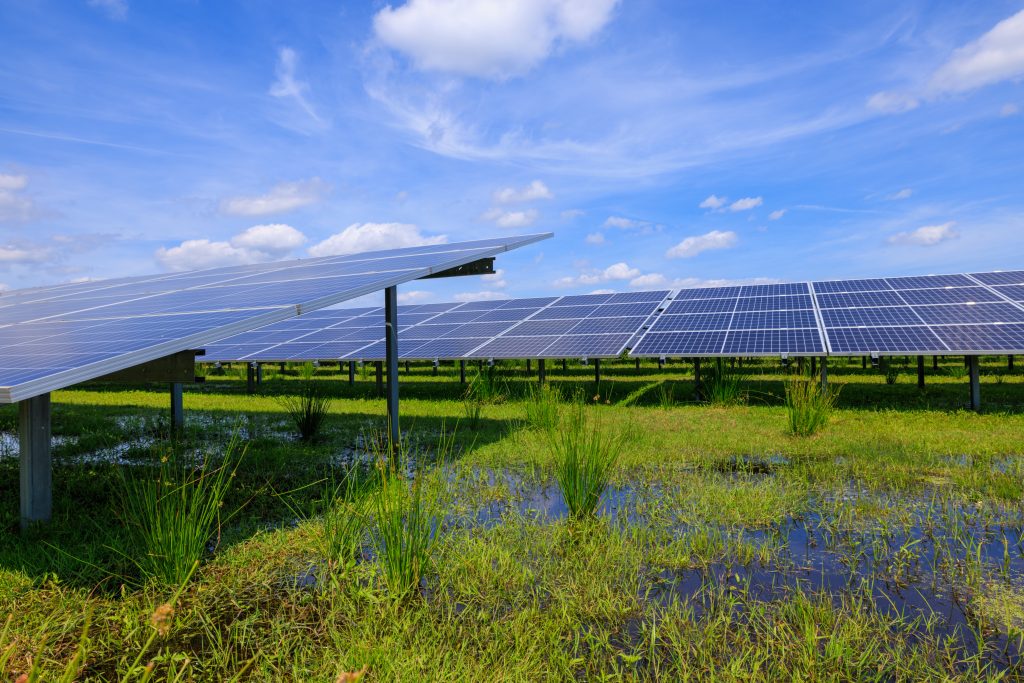
Chint Solar is committed to delivering well-designed solar farms that provide clean, reliable energy while supporting biodiversity and long-term environmental management.
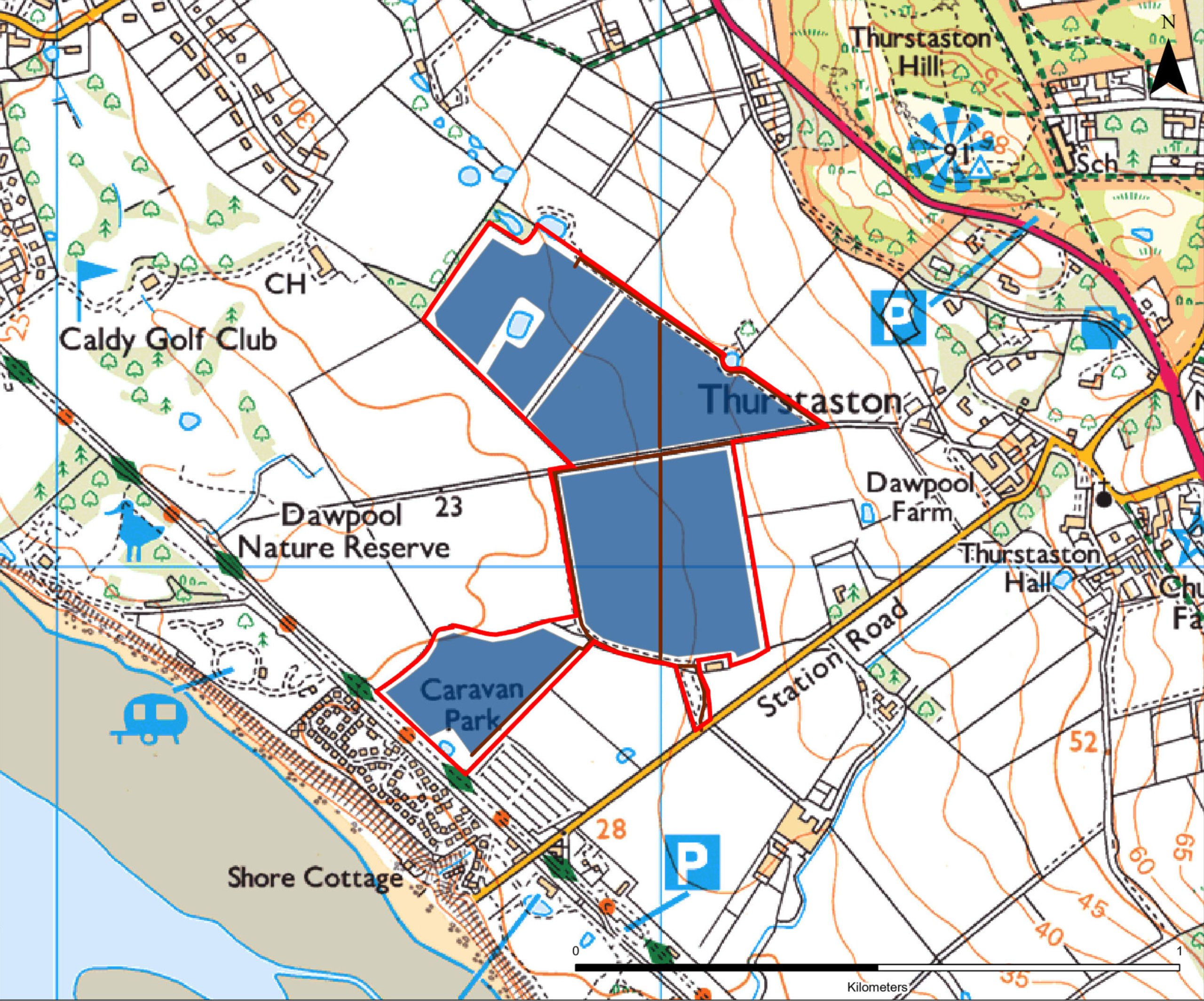
Click the image to enlarge
Why This Site?
The Rose Cottage site has been carefully selected for its suitability for clean energy generation.
Right Location for Clean Energy
The site has the space and layout needed to deliver solar power efficiently and with minimal impact.
Powering the Wirral Locally
Generating electricity close to where it is used reduces energy losses and helps strengthen the local network.
Supporting Climate Ambitions
The project supports Wirral’s target to become carbon neutral and contributes to wider national net zero goals.
Designed to Fit the Landscape
The site’s size also allows for a carefully planned landscaping and biodiversity enhancements, ensuring it sits comfortably within its surroundings.
Clean Energy Generation
Understanding Solar Farms
Do Solar Farms Harm the Environment?
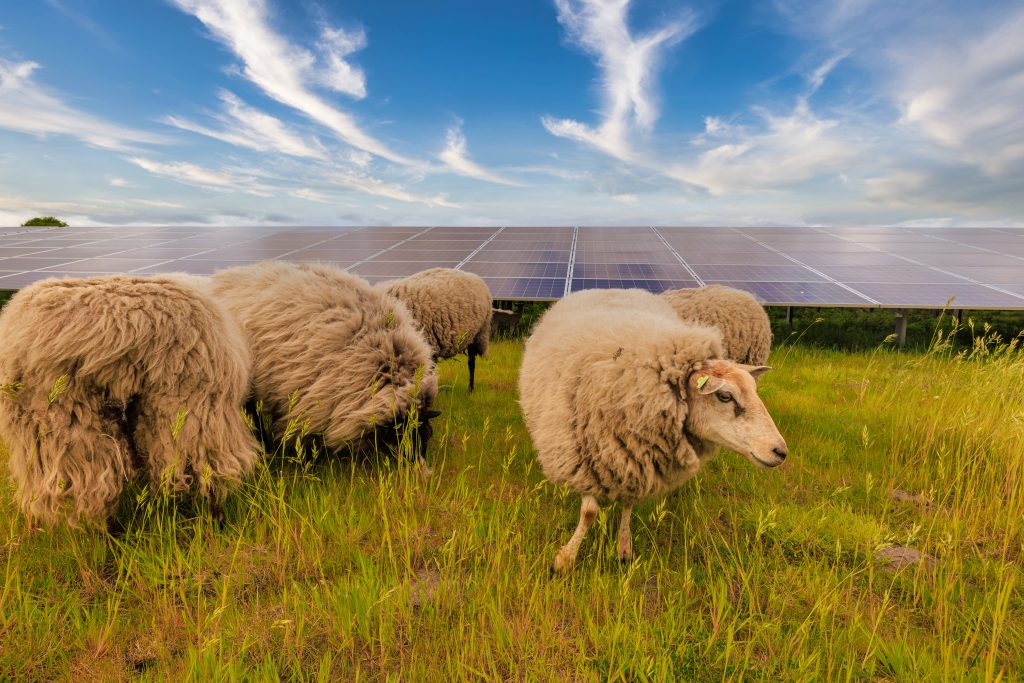
Well-designed solar farms can enhance biodiversity by creating habitats through wildflowers, hedgerows, and managed grassland. Many sites also support sheep grazing.
Do Solar Farms Generate Enough Electricity?
Solar farms can produce significant amounts of clean energy, powering thousands of homes and supporting both local and national energy needs.
Do Solar Farms Take Farmland Out of Use?
Solar farms are usually located on lower-quality agricultural land and often remain in active use for grazing. Sites can be fully restored once the panels are removed.
Our Proposals
Strengthening National Energy Security
By generating clean, renewable power, the scheme helps reduce reliance on fossil fuels and supports a more secure energy future.
Helping Deliver Clean Energy Targets
With a capacity of 26MW, the solar farm would contribute to local and regional net zero ambitions.
Enhancing Local Biodiversity
The proposals include opportunities for habitat creation, native planting, and biodiversity net gain.
Land Management and Regeneration
The solar farm will operate for a temporary period, after which all equipment will be removed and the land returned to agricultural use. During operation, the site will be managed to allow soil to rest and recover, improving structure and quality and supporting productive farming in the future.
Sensitive Landscaping and Wildlife Connectivity
Native planting, wildlife corridors, and new habitats will enhance ecological connectivity and help the development blend naturally into its surroundings.
Supporting Local Business Partners
Wherever possible, local businesses and suppliers will be used during construction and operation.
Community Benefit Fund
The consultation period has now closed, and we would like to thank local residents for the feedback they provided on the types of projects they feel would most benefit the community. This feedback will help shape both the focus of the fund and the level of contribution. The final structure and level of funding will be confirmed as the project progresses, informed by the community feedback and further discussions with local stakeholders.
Designed to Fit the Landscape
What Will the Solar Scheme Look Like?
Visually Integrated Panels
Panels will follow the natural contours of the land.
Landscape Screening
Native planting and strengthened boundaries will help screen views and integrate the site into the landscape.
How Will the Scheme Support Nature?
Biodiversity Net Gain
New habitats, wildlife corridors, and native planting.
Farming Continues
Opportunities for sheep grazing alongside the panels.
Low Impact, Temporary Use
Quiet and Unobtrusive
No moving parts and minimal operational noise.
Fully Reversible
All equipment will be removed and land restored at the end of the project.
Key considerations
Click an icon below to find out more.
Clean Energy in the Wirral
Wirral Council has set ambitious targets to reduce carbon emissions and promote sustainable development. The proposed solar farm at Rose Cottage, Thurstaston would help support these ambitions by generating renewable energy locally.
With a capacity of 26MW, the scheme could produce enough electricity to power approximately 7,000 homes each year, offsetting around 12,000 tonnes of carbon emissions annually and helping to strengthen the local and national energy network.
Environmental Impact Assessment
A full Environmental Impact Assessment (EIA) is being prepared in line with national regulations and guidance.
This will provide a comprehensive assessment of the potential effects of the proposed development, including landscape and visual impact, ecology, transport, noise, glint and glare, heritage, soils, and the water environment.
All assessments will be informed by up-to-date survey data and a defined worst-case development scenario, and will be submitted to Wirral Council as part of any future planning application.
Landscaping and Visual Impact
We recognise that the landscape and views across the Wirral are of particular importance to the local community.
A Landscape and Visual Impact Assessment will assess potential effects from key viewpoints, public rights of way, and nearby settlements. This will be based on a defined development layout and will include appropriate mitigation measures such as native planting, strengthened boundaries, and long-term landscape management.
Agriculture, Land Use and Soils
We recognise the long-standing agricultural history of the site and the important role farming plays in the local area.
Opportunities are being explored for sheep grazing alongside the solar panels, allowing continued agricultural use.
A Soil Management Plan will be prepared to minimise compaction and disturbance. At the end of the project’s operational life, all equipment will be removed and the land restored to agricultural use in line with an agreed restoration strategy.
Ecology and Biodiversity
The proposals place a strong emphasis on protecting and enhancing the natural environment.
Detailed ecological surveys are being undertaken across appropriate seasons to understand wildlife use of the site and surrounding area. This includes assessment of protected species and, where relevant, functionally linked land.
The findings of these surveys will inform the final design of the scheme and any necessary mitigation measures, in consultation with statutory bodies and specialist advisers.
Transport and Construction Management
A Transport Assessment will be prepared to assess construction and operational traffic, site access arrangements, and highway safety.
This will inform a Construction Management Plan, which will be agreed with Wirral Council and will set out measures to manage traffic movements, working hours, noise, site access, and environmental protection.
Where possible, local contractors and suppliers will be used during construction.
Green Belt and Planning Context
The proposed site lies within the Wirral Green Belt, where development is normally restricted.
As part of any planning application, Chint Solar will set out the site-specific planning case for the development, including its contribution to national and local energy and climate objectives and how potential impacts on openness and landscape character are avoided or minimised.
Any application will be assessed by Wirral Council in accordance with national and local planning policy.
Ongoing Engagement and Design Development
The proposals remain at an early stage of development, and the design will continue to evolve as technical studies and community feedback are completed.
Feedback received during the consultation will be used to help inform the final layout, mitigation measures, and management plans submitted as part of any future planning applicaiton.
Community Benefits
If the scheme is approved, Chint Solar intends to establish a community benefit fund to support local projects and initiatives.
During the consultation, we sought to hear from residents about the types of projects they feel would most benefit the community. This feedback will help shape both the focus of the fund and the level of contribution.
On similar projects, contributions of around £300 per megawatt per year have typically been made for schemes of this scale, which could equate to approximately £7,500 per year for this proposal.
The final structure and level of funding will be confirmed as the project progresses, informed by community feedback and further discussions with local stakeholders.
Virtual Exhibition
Frequently Asked Questions
Why has this site been chosen?
The Rose Cottage site is well suited to solar energy generation due to its layout, and proximity to local electricity demand.
Generating power close to where it is used reduces energy losses and helps support the local electricity network. The layout allows the scheme to generate renewable energy while also having space for new trees, grassland and habitats, ensuring the project integrates sensitively with its surrounding environment.
Will this affect the landscape and local views?
The proposals have been designed to fit sensitively within the surrounding landscape.
A Landscape and Visual Impact Assessment will be carried out as part of the Environmental Impact Assessment. This will assess views from nearby settlements, public rights of way, and key viewpoints, and will inform the final layout and planting proposals.
What will be done to mitigate flood risk?
A Flood Risk and Drainage Strategy will be submitted with the planning application. This will assess drainage and set out measures to ensure that the development does not increase any risk on site or nearby.
How will construction traffic access the site?
Construction vehicles will access the site via the south-east just off Station Road.
Will there be extra traffic during construction?
A Transport Assessment will be prepared as part of the Environmental Impact Assessment to assess construction and operational traffic, site access arrangements, and highway safety.
This will inform a Construction Management Plan, which will set out measures to manage vehicle movements, working hours, and site access, and to minimise disruption to local residents and businesses.
How will the development affect local traffic?
There may be a temporary increase in traffic during construction, but this will be short-term during the first few months and managed appropriately. Once operational, only a small number of vehicles will visit the site each week for routine maintenance.
Will the development be noisy?
Construction noise will be temporary and managed through agreed working hours. Once operational, inverter noise is low-level and typically not audible beyond the site boundary.
How will wildlife be protected?
Detailed ecological surveys are being carried out across appropriate seasons as part of the Environmental Impact Assessment.
These surveys assess protected species and wildlife use of the site and surrounding area. The findings will inform the final design and any necessary mitigation measures, in consultation with specialist advisers and statutory bodies where required.
How will the development affect wildlife and greenery?
A full Environmental Impact Assessment (EIA) will assess effects on the existing environment and ensure the development achieves biodiversity net gain with minimal impact.
Will there be a biodiversity net gain?
Yes. The development will deliver a minimum of 10% biodiversity net gain.
Will the land still be used for farming?
Yes. Opportunities are being explored for continued sheep grazing alongside the solar panels, allowing the land to remain in agricultural use.
At the end of the project’s operational life, all equipment will be removed and the land will be restored to agricultural use in line with an agreed restoration strategy.
What is the lifespan of the project?
The solar panels will operate for approximately 40 years, after which the land will be returned to its existing use. Panels are installed above ground, allowing the soil to recover, and the land can return to full agricultural use at the end of the project.
Additionally, Chint Solar is exploring opportunities for local farmers to graze sheep in between the solar panels allowing the land to remain productive.
What happens at the end of the project?
A restoration strategy will be agreed with Wirral Council as part of any planning permission.
This will set out how equipment will be removed, soils protected, and the land returned to agricultural use in an improved condition.
How does this fit with Green Belt policy?
The site lies within the Wirral Green Belt, where development is normally restricted.
As part of any planning application, Chint Solar will set out the site-specific planning case for the development, including its contribution to energy security and climate objectives, and how potential impacts on openness and landscape character are minimised.
The proposals will be assessed by Wirral Council in line with national and local planning policy.
How tall will the solar panels be?
The solar panels will have a maximum height of up to 3.5 metres above ground level. Landscaping measures including tree planting and strengthening site boundaries will be used to mitigate visual impacts.
How will the local community benefit?
If approved, a community benefit fund will be established to support local projects and initiatives.
During consultation, residents were invited to share their views on how this funding should be used as part of the consultation. The feedback received will help shape the focus and structure of the fund.
How can I stay informed?
Project updates will be provided through the website and consultation channels.
Residents can also request to receive updates by providing their contact details through the feedback form.
Feedback
This consultation has now closed. Please do contact a member of the team if you have any questions. Contact details can be found in the ‘Get in Touch’ section below.
- Emailing us with your comments or questions at: rosecottagesolar@havingyoursay.co.uk
- Calling the team on 0333 358 0502 (lines open Monday – Friday, 9:00am to 5:30pm)
- Writing to us at FREEPOST SHAPE TOMORROW
All feedback received will be summarised and responded to in a Statement of Community Involvement, which will be submitted alongside the planning application to Wirral Council later this year.
Community Feedback Form
To what extent do you agree with these statements?
About Chint Solar
Chint Solar is an experienced European renewable energy developer with a growing portfolio of solar projects across the UK. Drawing on global expertise we are committed to delivering high-quality renewable energy schemes that support national and local decarbonisation goals.
We specialise in the delivery of sensitively designed solar farms that provide clean, reliable energy while responding to local context. Our designs consider unique landscape character, ensuring that each project sits comfortably within its surroundings.
Alongside renewable energy generation, our projects place a strong emphasis on biodiversity and long-term environmental management. This includes measures such as habitat creation, new planting, and land management to improve ecological value over the lifetime of a scheme.
Our approach is rooted in with local communities and stakeholders to ensure that our schemes respond to local priorities and contribute positively to their surroundings.
To find out more about Chint Solar and our other projects, please click the link below to visit our website: Chintsolar.co.uk